

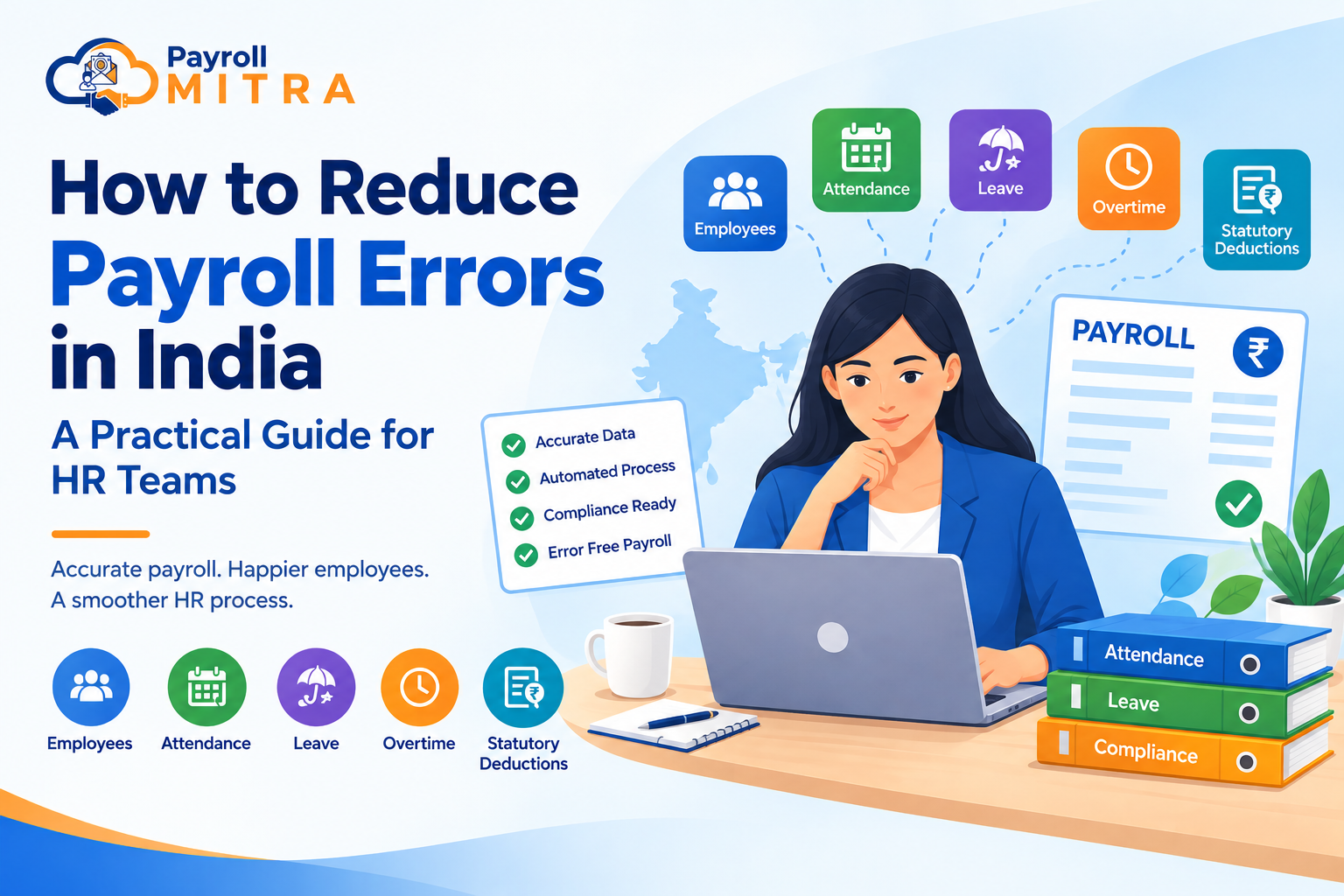
Payroll may look straightforward from the outside: calculate salaries, apply deductions, and pay employees on time. In practice, payroll teams in India manage multiple inputs, including salary structures, attendance, leave, overtime, statutory deductions, employee records, and compliance requirements.
Even a small mistake in any of these areas can result in an incorrect salary, employee query, additional administrative work, or compliance-related issues.
For growing businesses, the challenge becomes greater when HR, attendance, leave, and payroll are managed through separate spreadsheets or disconnected systems. Manual data entry and repeated calculations can make payroll more difficult to manage accurately.
Why Are Payroll Errors So Common in India?
Payroll errors rarely happen because of one major mistake. They are often the result of several small gaps in data, processes, calculations, and approvals.
Some common reasons include:
1. Frequent Regulatory Changes
Indian payroll involves multiple statutory requirements, including PF, ESI, professional tax, TDS, and applicable wage and employment rules. Changes in regulations or employee circumstances can require payroll teams to review their calculations and configurations regularly.
Using outdated rules or payroll settings can lead to incorrect deductions or reporting.
2. Disconnected HR Systems
When attendance, leave, shifts, and payroll are maintained separately, HR teams may need to transfer information manually.
For example, approved leave may be recorded in one system but not reflected in the payroll data before salary processing.
3. Manual Data Entry
Spreadsheets can be useful for basic record-keeping, but manually transferring employee information, attendance, overtime, deductions, or salary changes increases the possibility of data-entry mistakes.
4. Complex Shift and Overtime Calculations
Businesses with rotating shifts, night shifts, overtime, or field employees may have more complex payroll inputs.
When these records are maintained manually, HR teams may spend additional time checking them before payroll is finalized.
5. Incomplete Employee Records
Incorrect or outdated bank details, salary structures, tax information, attendance records, or employee status can affect payroll calculations.
The more employees a company manages, the more difficult it becomes to identify these issues manually.
Common Payroll Errors in India
1. Incorrect Salary Structure
An employee’s salary structure can affect statutory calculations and payroll accuracy.
Under the wage framework, certain excluded components may need to be considered in the statutory definition of wages when the prescribed 50% threshold is exceeded. Therefore, businesses should review salary structures against the applicable rules rather than relying on an outdated salary template.
Why it happens
- Old salary templates continue to be used
- New allowance components are added without review
- Salary structures are not periodically checked
- Statutory requirements are not considered when compensation structures change
How to prevent it
Review salary structures periodically and whenever there are significant changes to compensation policies or applicable regulations.
2. Incorrect PF, ESI, PT, or TDS Calculations
Statutory deductions are an important part of Indian payroll.
Errors can occur when payroll teams use incorrect employee information, outdated configurations, incorrect eligibility information, or inappropriate deduction settings.
Common causes include:
- Incorrect PF wage inputs
- Incorrect ESI applicability
- Wrong professional tax configuration
- Incorrect employee tax information
- Salary revisions not reflected correctly
- Incorrect deduction settings
How to prevent it
Use properly configured payroll software, regularly review statutory settings, and verify important changes before processing the payroll cycle.
3. Attendance and Leave Data Errors
Attendance is one of the most important inputs for payroll.
Missing punches, incorrect attendance, unapproved leave, outdated leave balances, or incorrect LOP information can affect salary calculations.
For example:
Attendance → Leave/LOP → Overtime → Payable Days → Salary Calculation
If the attendance data is incorrect at the beginning of this process, the error can continue through the payroll cycle.
How to prevent it
- Keep attendance records updated
- Allow employees to request attendance regularization
- Approve leave before the payroll cutoff
- Review missing punches and exceptions
- Connect attendance and leave data with payroll
Payroll Mitra supports attendance, leave, regularization, overtime, and payroll workflows in one connected system.
4. Incorrect Overtime and Shift Calculations
Businesses operating in manufacturing, logistics, retail, services, and other shift-based environments may need to manage different working schedules.
Payroll errors can occur when:
- Overtime hours are entered incorrectly
- Shift information is outdated
- Night or rotating shifts are not configured correctly
- Overtime is maintained separately from attendance
- Manual calculations are used repeatedly
How to prevent it
Maintain shift schedules and overtime records digitally and connect relevant attendance information with payroll.
Payroll Mitra supports fixed, rotating, and night shifts along with shift-based attendance and overtime calculations.
5. Late or Missed Statutory Payments
Payroll accuracy is not limited to calculating salary. Businesses also need appropriate processes for statutory payments and reporting within applicable timelines.
A payroll team may calculate deductions correctly but still face issues if the payment or filing process is delayed.
How to prevent it
Create a clear compliance calendar, assign responsibility, and maintain records of payments, reports, and supporting documents.
Payroll Mitra provides compliance reports, PF challan generation, ECR file preparation, and compliance alerts and reminders.
6. Outdated Employee Information
Payroll depends on accurate employee data.
Common examples include:
- Incorrect bank account details
- Outdated salary information
- Incorrect employee status
- Missing tax information
- Old department or designation
- Incorrect joining or exit information
How to prevent it
Maintain a central employee database and establish a process for reviewing important employee changes before each payroll cycle.
7. Manual Excel-Based Payroll Errors
Excel can be useful for basic calculations and temporary records, but large or complex payroll processes can become difficult to manage manually.
Common Excel-related problems include:
- Incorrect formulas
- Accidental data changes
- Duplicate records
- Manual copy-paste errors
- Version-control issues
- Missing updates
- Difficulty tracking changes
As employee numbers and payroll complexity increase, these problems can become harder to identify.
How to prevent it
Automate repetitive payroll tasks and use a centralized payroll system where employee, attendance, leave, salary, and statutory information can be managed together.
8. Salary Revisions and Arrears Errors
Salary revisions, promotions, bonuses, and arrears can change payroll calculations.
Errors may occur when the revised salary is updated in one record but not another.
How to prevent it
Maintain a structured approval process for salary revisions and ensure approved changes are reflected in payroll before the applicable salary cycle.
Payroll Mitra supports salary revisions and arrears management as part of its salary management system.
9. Employee Loan and Advance Deduction Errors
When employee loans or advances are managed manually, HR teams may need to track:
- Original loan amount
- EMI amount
- Outstanding balance
- Deduction start date
- Remaining installments
Manual tracking can lead to incorrect or missed deductions.
Payroll Mitra provides loan and advance tracking, EMI scheduling, automatic salary deductions, and loan ledgers.
10. Payroll Records and Reports Not Matching
Payroll teams may maintain salary registers, attendance records, statutory reports, payslips, and bank transfer information separately.
If these records do not match, HR may need to spend additional time identifying the source of the difference.
How to prevent it
Maintain a central payroll workflow and generate reports from the same underlying employee and payroll data wherever possible.
How to Reduce Payroll Errors in India
Identifying errors is important, but preventing them before payroll is finalized is even better. HR teams can follow a simple process to improve payroll accuracy.
Step 1: Maintain Accurate Employee Data
Keep employee salary, attendance, leave, bank, tax, and employment information updated.
Create a defined process for recording:
- New hires
- Exits
- Promotions
- Salary revisions
- Transfers
- Changes in employee information
Step 2: Connect Attendance and Payroll
Attendance should not be treated as a completely separate HR activity.
Working days, leave, LOP, overtime, shifts, and attendance corrections can affect payroll inputs. Connecting these processes reduces the need for repeated manual data entry.
Payroll Mitra connects attendance, leave, shifts, overtime, and payroll workflows to help HR teams manage payroll-related information more efficiently.
Step 3: Automate Salary Calculations
Manual salary calculations require HR teams to repeatedly check:
- Payable days
- Leave/LOP
- Overtime
- Salary components
- Deductions
- Statutory contributions
- Arrears
- Loans and advances
Automating these repetitive calculations can reduce manual effort and improve consistency.
Step 4: Review Statutory Deductions
Before finalizing payroll, review applicable PF, ESI, PT, TDS, and other statutory deductions.
Do not assume that an old configuration remains correct indefinitely. Employee salary, eligibility, declarations, and applicable rules can change.
Step 5: Create a Payroll Pre-Processing Checklist
Before running the final payroll, HR teams should check:
- New employees added?
- Exits updated?
- Salary revisions approved?
- Attendance finalized?
- Leave approved?
- LOP verified?
- Overtime reviewed?
- Loan deductions updated?
- Statutory deductions checked?
- Bank details verified?
A simple checklist can prevent small mistakes from becoming payroll problems.
Step 6: Review Payroll Before Salary Disbursement
Do not treat payroll calculation as the final step.
Review salary summaries, unusual changes, large variances, deductions, and employee records before releasing salaries.
A comparison with the previous payroll cycle can also help HR identify unexpected changes.
Step 7: Maintain Digital Payroll Records
Keep salary registers, attendance records, statutory reports, payslips, and relevant payroll documentation organized.
Well-maintained digital records make it easier to answer employee queries and support internal reviews or compliance requirements.
How Payroll Software Helps Reduce Payroll Errors
Payroll software does not remove the need for HR review, but it can reduce repetitive manual work and provide a more structured payroll process.
A connected payroll system can help businesses:
Automate Salary Calculations
Salary can be calculated using employee salary structures and relevant payroll inputs.
Connect Attendance With Payroll
Attendance, leave, shifts, and overtime can become part of the payroll workflow instead of being repeatedly entered manually.
Standardize Statutory Calculations
Payroll systems can automate applicable PF, ESI, PT, and other configured statutory deductions.
Reduce Duplicate Data Entry
A centralized system reduces the need to transfer the same employee information between multiple spreadsheets.
Improve Payroll Visibility
Reports and dashboards help HR teams review payroll, attendance, leave, and statutory information.
Give Employees Self-Service Access
Employees can access relevant information such as payslips, attendance, leave, and other payroll-related records, reducing routine queries to HR.
How Payroll Mitra Helps Reduce Payroll Errors
Payroll Mitra is a cloud-based payroll and HRMS platform designed for Indian businesses.
Instead of managing payroll, attendance, leave, shifts, loans, and compliance through disconnected processes, businesses can manage these activities through one integrated platform.
Payroll Mitra supports key areas that can help reduce manual payroll work, including:
- Salary Management: Automated salary calculations, salary structures, overtime, shift-based salary, revisions, arrears, bank transfer files, and payslips.
- Attendance & Leave: Biometric, web, and mobile attendance, shift-wise tracking, regularization, overtime, leave management, and attendance-payroll synchronization.
- Payroll Compliance: PF, ESI, PT, and LWF compliance, statutory deductions, PF challan generation, ECR file preparation, and compliance-ready reports.
- Loans & Advances: Loan tracking, EMI scheduling, salary deductions, and loan records.
- Reports & Analytics: Salary registers, payroll summaries, attendance and leave reports, statutory reports, MIS dashboards, and department or location-wise analytics.
This connected workflow can be represented simply as
Employee Data → Attendance → Leave/LOP → Shifts & Overtime → Salary Calculation → Statutory Deductions → Payroll → Reports & Payslips
The benefit is not that software makes every payroll decision automatically. The benefit is that it gives HR teams a more structured system with fewer repetitive manual steps.
Payroll Error Prevention Checklist for HR Teams
Before finalizing each payroll cycle, ask:
☑ Are all new employees added?
☑ Are exited employees updated?
☑ Are salary revisions approved and updated?
☑ Is attendance finalized?
☑ Are leave and LOP records correct?
☑ Has overtime been reviewed?
☑ Are shift records accurate?
☑ Are loan and advance deductions updated?
☑ Are PF, ESI, PT, and TDS calculations reviewed where applicable?
☑ Are employee bank details correct?
☑ Have unusual salary changes been checked?
☑ Are payroll reports and payslips ready?
☑ Are required statutory records and reports maintained?
This checklist can help HR teams catch common payroll mistakes before salaries are released.
Conclusion
Payroll errors in India are rarely caused by one isolated calculation. They can result from outdated employee information, incorrect attendance, manual salary calculations, disconnected HR systems, statutory deduction mistakes, salary revisions, or insufficient payroll checks.
The key is to identify and correct potential issues before payroll is finalized.
HR teams can improve payroll accuracy by maintaining reliable employee data, connecting attendance and payroll, automating repetitive calculations, reviewing statutory deductions, and using structured pre-payroll checks.
For growing businesses, an integrated payroll and HRMS platform can make this process easier by bringing salary, attendance, leave, shifts, overtime, loans, compliance, and reporting into one connected workflow.
Payroll Mitra helps Indian businesses simplify these payroll and HR processes while reducing repetitive manual work and improving visibility across payroll operations.