

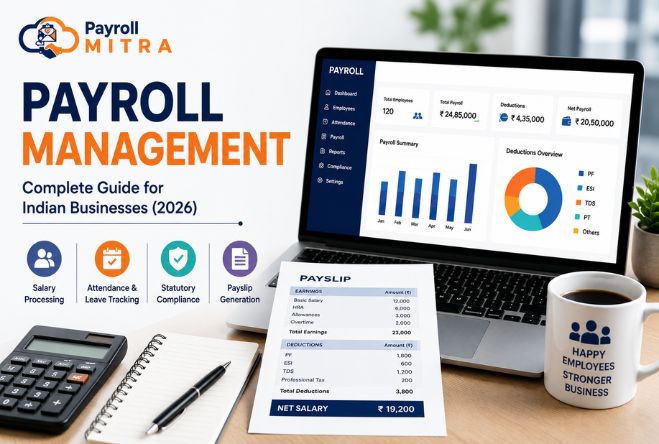
Payroll management is one of the most critical business functions for organizations of every size. Whether you run a startup with ten employees or a large enterprise with hundreds of team members, ensuring that employees are paid accurately and on time directly impacts employee satisfaction, legal compliance, and business productivity.
In today’s competitive business environment, payroll is no longer limited to salary calculation. It includes attendance management, leave tracking, overtime calculations, bonuses, tax deductions, statutory compliance, payslip generation, and secure salary disbursement. Managing all these activities manually is not only time-consuming but also increases the chances of costly errors and compliance issues.
This is why modern businesses are adopting payroll management software to automate repetitive tasks, improve payroll accuracy, and simplify HR operations.
What is Payroll Management?
Payroll management is the process of calculating employee salaries, deducting taxes and statutory contributions, generating payslips, and ensuring timely salary payments while complying with government regulations.
A complete payroll management system includes:
- Employee information management
- Attendance tracking
- Leave management
- Salary structure management
- Overtime calculation
- Bonus and incentive management
- Tax deductions
- PF, ESI, PT & TDS compliance
- Payslip generation
- Salary disbursement
- Payroll reporting
An efficient payroll system ensures employees receive accurate salaries while helping businesses remain compliant with Indian labour and tax laws.
Why Payroll Management is Important
Payroll directly affects employee trust, business reputation, and financial accuracy. A single payroll mistake can reduce employee confidence and create unnecessary administrative work.
Ensures Accurate Salary Processing
Payroll software eliminates manual calculations and ensures employees receive the correct salary every month.
Saves Time
HR teams spend significant time collecting attendance data, calculating salaries, and preparing reports. Automation reduces processing time from days to just a few hours.
Improves Compliance
Indian businesses must comply with PF, ESI, Professional Tax, TDS, and various labour regulations. Automated payroll systems reduce compliance risks.
Enhances Employee Satisfaction
Timely salary payments, transparent payslips, and Employee Self-Service (ESS) portals improve employee experience.
Supports Business Growth
As organizations expand, payroll complexity increases. Automated payroll systems scale easily without increasing administrative workload.
Step-by-Step Payroll Process
Step 1: Employee Information Collection
Maintain updated employee records including:
- Personal details
- Bank account information
- Salary structure
- PAN & Aadhaar details
- Tax declarations
- Joining date
- Department details
Accurate employee information forms the foundation of error-free payroll processing.
Step 2: Attendance and Leave Tracking
Payroll calculations depend heavily on attendance data.
Businesses track:
- Present days
- Weekly offs
- Paid leave
- Casual leave
- Sick leave
- Unpaid leave
- Overtime
- Late arrivals
- Shift timings
Integrating attendance management with payroll eliminates manual data entry and improves accuracy.
Step 3: Gross Salary Calculation
Gross salary generally includes:
- Basic Salary
- House Rent Allowance (HRA)
- Dearness Allowance (DA)
- Special Allowances
- Performance Bonus
- Incentives
- Overtime Pay
- Reimbursements (if applicable)
Payroll software automatically calculates earnings based on the predefined salary structure.
Step 4: Statutory & Other Deductions
Applicable deductions include:
- Provident Fund (PF)
- Employee State Insurance (ESI)
- Professional Tax (PT)
- Tax Deducted at Source (TDS)
- Loan Recovery
- Salary Advance Recovery
- Other Company Deductions
Step 5: Net Salary Calculation
Net Salary is calculated as:
Net Salary = Gross Pay − Employee Deductions
Automation minimizes errors and ensures employees receive the correct salary.
Step 6: Payslip Generation
Payroll software automatically generates digital payslips containing:
- Earnings
- Deductions
- Tax Information
- Employer Contributions
- Net Salary
Employees can securely download their payslips whenever required.
Step 7: Salary Disbursement
Approved payroll is transferred directly to employees’ bank accounts through secure banking integrations, ensuring timely salary payments.
Step 8: Payroll Reports & Compliance
Payroll reports help businesses manage:
- Salary Registers
- Department-wise Payroll
- Compliance Reports
- Cost Analysis
- Tax Reports
- Audit Records
Key Components of Payroll Management
A modern payroll management system combines multiple HR functions into a single platform.
Employee Database Management
Stores employee records, salary structures, departments, and employment history.
Attendance Management
Automatically captures attendance through biometric devices, web portals, or mobile applications.
Leave Management
Tracks leave balances, approvals, and leave deductions.
Salary Structure Management
Supports customized salary components according to company policies.
Bonus & Incentive Management
Automates bonus calculations and incentive payouts.
Reimbursement Management
Handles travel claims, medical reimbursements, and employee expenses.
Compliance Management
Automatically calculates PF, ESI, PT, TDS, and statutory contributions.
Payroll Analytics & Reports
Provides HR teams with actionable payroll insights for better decision-making.
Manual Payroll vs Automated Payroll
| Manual Payroll | Automated Payroll |
| Time-consuming | Fast and efficient |
| Manual calculations | Automatic calculations |
| Higher error rates | Improved accuracy |
| Compliance challenges | Automated compliance |
| Manual attendance entry | Attendance integration |
| Paper-based records | Cloud-based records |
| Limited reporting | Advanced reports & analytics |
| Difficult to scale | Easily scalable |
Benefits of Payroll Software
Using payroll software offers several advantages for businesses.
Faster Payroll Processing
Automates repetitive tasks and reduces payroll processing time.
Improved Accuracy
Reduces human errors in salary calculations and deductions.
Better Compliance
Automatically calculates statutory contributions and generates compliance reports.
Employee Self-Service
Employees can access payslips, tax documents, attendance records, and leave balances anytime.
Secure Payroll Data
Cloud-based platforms provide encryption, role-based access, and regular backups.
Business Scalability
Payroll software grows with your business without increasing administrative complexity.
Payroll Compliance in India
Every employer should understand the major payroll compliance requirements.
Provident Fund (PF)
Ensures retirement savings through employer and employee contributions.
Employee State Insurance (ESI)
Provides healthcare and insurance benefits for eligible employees.
Professional Tax (PT)
Applicable in several Indian states based on state-specific regulations.
Tax Deducted at Source (TDS)
Income tax deducted according to applicable tax laws.
Labour Law Compliance
Maintaining payroll records and statutory registers is essential for regulatory compliance.
Common Payroll Mistakes Businesses Should Avoid
- Incorrect attendance records
- Delayed salary payments
- Manual calculation errors
- Missing statutory deadlines
- Poor payroll documentation
- Outdated employee records
- Inadequate payroll security
- Lack of payroll audits
Avoiding these mistakes helps improve payroll accuracy and employee trust.
Best Practices for Payroll Management
- Maintain accurate employee records.
- Automate attendance and leave management.
- Process payroll on time every month.
- Review payroll reports regularly.
- Stay updated with changing compliance regulations.
- Secure confidential payroll information.
- Conduct periodic payroll audits.
- Use integrated payroll and HRMS software.
How Payroll Mitra Simplifies Payroll Management
Payroll Mitra helps businesses automate payroll and HR operations through a single integrated platform.
Key capabilities include:
- Automated salary processing
- Attendance management
- Leave management
- Employee database management
- Digital payslip generation
- PF, ESI, PT & TDS calculations
- Compliance reporting
- Employee Self-Service portal
- Payroll analytics
- Secure cloud-based payroll management
By automating routine payroll tasks, Payroll Mitra enables HR teams to focus on strategic business initiatives instead of manual administrative work.
Conclusion
Payroll management is much more than salary processing. It plays a vital role in maintaining employee satisfaction, ensuring legal compliance, improving financial accuracy, and supporting organizational growth.
As businesses expand, manual payroll methods become inefficient and increase the risk of errors. Investing in a modern payroll management system helps organizations automate payroll processing, improve compliance, secure sensitive employee data, and streamline HR operations.
Whether you are a startup, SME, or enterprise, adopting an integrated payroll solution can significantly improve operational efficiency while allowing HR teams to focus on strategic business goals.
Ready to Simplify Your Payroll?
If you’re looking for a reliable payroll and HR management solution, Payroll Mitra can help automate salary processing, attendance management, statutory compliance, leave management, and employee records from a single platform.
Explore Payroll Mitra today and simplify your payroll management with accuracy, compliance, and confidence.